Swedish Match AB
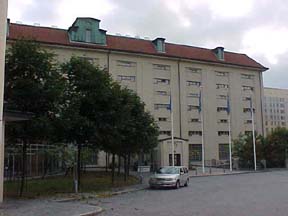
Swedish Match, with over $1 billion in revenues and 10,000 employees, gets to call itself the world's largest manufacturer of matches, the world's third largest maker of disposable lighters (Cricket brand) and one of the world's largest producers of pipe tobacco, snuff, chewing tobacco and cigars. The company recently sold its cigarette operations to Austria Tabak. Standing outside Swedish Match's five-story head office I'm not sure what I'm looking at. The building's windows are small and slot-like similar to what one might see in a military armory complex. Then again, could this be a former prison? To enter the building one travels along a 50-foot long enclosed humidified walkway lined with 16 plants and trees. Before reaching the reception counter one first must make peace with a large antique cannon guarding the entrance door. Dated 1620, the spiffy-looking cannon was recovered from the ship Kronan. It's an interesting lobby area with array of items such as the wood statue from 1808 of an African smoking a pipe, a scale model of the sailboat the company sponsored in the 1997-98 Whitbread Around the World race, four plants and even a shoe buffer. Embedded in one wall are display cases filled with company memorabilia such as boxes of old matchbooks. While waiting for my contact person I ask the receptionist if she smokes. "No" she answers. Personable Jane Hellers, executive secretary to CEO Lennart Sunden, gives me a terrific reception and an extensive tour around this former tobacco warehouse facility. Built in the 1920's, there's an attic floor along with double basements. The upper basement and ground floor was used for manufacturing moist snuff while the floors above were used for hanging leaf tobacco, which explains the narrow horizontal windows. The company renovated and restored the place almost three years ago. Being a "historically valuable" building, only minor exterior changes were allowed. The problem of lighting up the dark interior was solved by replacing the old roof with a glass roof and then tearing out floors in the center of the building, thereby allowing light to flood in. About 200 employees work here. Meeting rooms are named after company tobacco brands such as the Redman and Hamilton rooms. There's plenty of free employee parking, smoking is allowed in the building (gee what a surprise), the company's corporate art collection is described as traditional. CEO Sunden's fourth floor corner office with green chairs and wood floor contains three plants, not one but two desktop computers, six company tombstones, framed 1931 company stock certificates, no personal pictures or items and just about the funniest-looking windows ever seen in a CEO's office. The small square slits for windows results from the building's earlier use as a tobacco warehouse. The boardroom is unique. No, it's not the table which seats 16 or the two tins of snuff or even the room being set-up for teleconferencing. Running the length of one wall is an impressive 40-foot long by 10-foot high beautiful mural chronicling the history of tobacco. |